10 Best Tomato Starter Kits for Beginners in 2026

A tomato starter kit bundles the basics — cells or containers, growing medium, and sometimes seeds — into one purchase, so you're not piecing together supplies from scratch. We looked at ten of the most popular kits on Amazon and compared them on the things that actually matter for starting tomatoes, not just overall star ratings.
If you are new to growing tomatoes from seed, a complete kit can save you from buying every basic supply separately. Our overall pick is the Burpee Best Starter Kit. For larger batches, consider the Burpee XL Self-Watering Growing System or a 72-cell kit. If you already own trays and growing mix, a seeds-only collection may make more sense.
Compare the Top Tomato Starter Kits
These 10 picks aren't all the same type of product — some are complete seed kits, some are empty trays, one is a hydroponic system, and one is seeds only. We've grouped each by what it's actually best for, so you can compare within your own use case rather than assuming it's an apples-to-apples list.
| Product | Best For | Capacity | Seeds Included? | Amazon Rating* | |
|---|---|---|---|---|---|
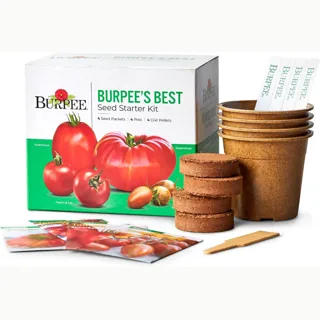 Burpee Best Starter Kit | Complete tomato kit | 4 pots | Yes | 4.3★ (455) | Check Price |
 Burpee XL Self-Watering | Larger seedlings | 32 cells | No | 4.3★ (3,477) | Check Price |
 Burpee 72-Cell Kit | Many seedlings | 72 cells | No | 4.3★ (2,933) | Check Price |
 Click & Grow Cherry Tomato | Indoor / no soil | 3 pods | Yes (pre-seeded) | 3.8★ (399) | Check Price |
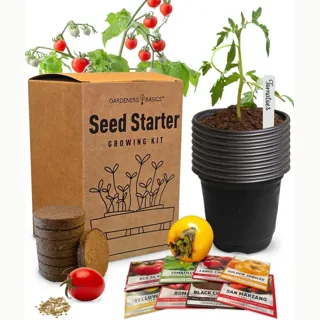 8-Variety Tomato Kit | Most variety | 8 pots | Yes | 4.2★ (92) | Check Price |
 Burpee Best 10 Seeds | Seeds only | — | Yes (10 varieties, no cells) | 4.2★ (132) | Check Price |
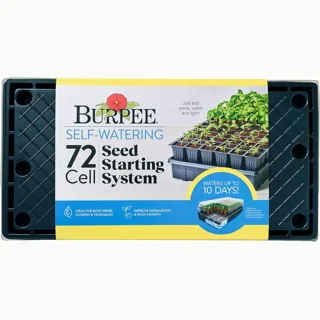 Burpee Self-Watering Tray | Bulk growing | 72 cells | No | 4.0★ (340) | Check Price |
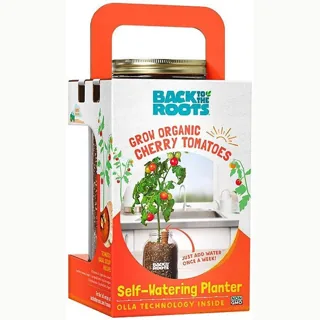 Back to the Roots Planter | Small spaces | 1 planter | No | 3.3★ (26) | Check Price |
 Unique Gardener Kit | Compact all-in-one | 1 sprouter | Yes | 4.0★ (15) | Check Price |
 Jiffy 36-Cell Tray | Simple setup | 36 cells | No | 3.8★ (29) | Check Price |
*Amazon ratings, review counts, and capacity/seed details can change — check the current listing before buying. These are Amazon-reported figures, not independent TomatoSeedGuide testing.
How We Evaluated These Tomato Starter Kits
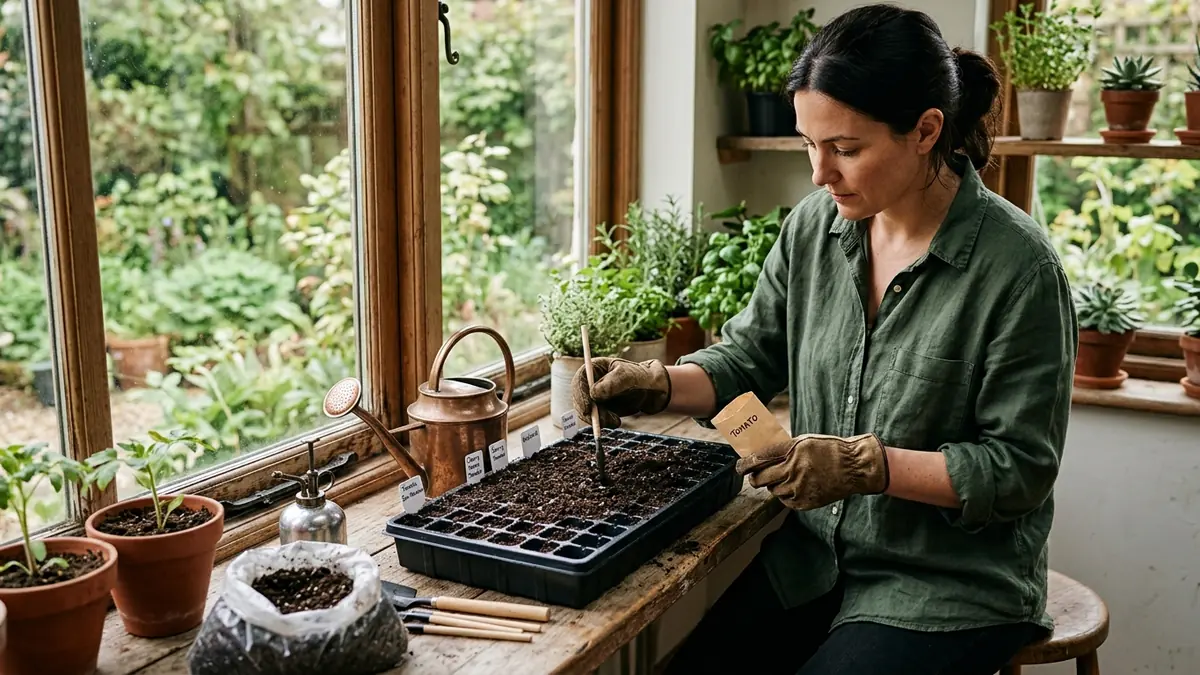
We compared publicly listed specifications and verified Amazon customer feedback for each kit — we have not physically tested every product on this list, and we say so plainly rather than implying hands-on testing we didn't do. Each kit was evaluated against the same criteria:
That last point matters more than it sounds — tomatoes are deep-rooted and grow fast compared to many other seedlings, so a tray designed for shallow-rooted herbs or flowers isn't automatically a good tomato kit even if it's marketed as one.
Our 10 Tomato Starter Kit Picks
Burpee Best Starter Kit
The easiest all-in-one choice for a beginner who wants a few named tomato varieties without assembling every supply separately. Burpee's own listing confirms it includes four tomato varieties, four biodegradable pots, four coir pellets, and plant markers.
- Four distinct tomato varieties
- Biodegradable pots and coir pellets included
- Backed by Burpee's germination guarantee
- Only 4 growing positions
- Not built for 20+ seedlings
- No grow light or heat mat included
Best for: Beginners who want a ready-made kit with named varieties.
Skip it if: you want to start more than a handful of plants — look at the 72-cell kit instead.
Check Latest Price on AmazonBurpee XL Self-Watering Growing System, 32 Cells
Larger 2.25-inch cells give tomato seedlings more room to develop before they need transplanting, and a self-watering mat takes some of the guesswork out of moisture control.
- Extra-deep cells suited to tomato roots
- Self-watering mat reduces over/under-watering
- Includes dome cover and markers
- No seeds included
- 32 cells may be more than a first-time grower needs
- Dome should come off once seedlings are established
Best for: Growers who want more root room and fewer watering mistakes.
Skip it if: you only want 4-8 plants — a smaller kit is more cost-effective.
Check Latest Price on AmazonBurpee 72-Cell Seed Starting Kit
Two 36-cell trays plus a humidity dome give you real capacity if you're starting a full garden bed's worth of tomatoes, or several varieties at once.
- 72 total cells across two trays
- Humidity dome speeds germination
- Good value per cell
- Cells are shallower than the XL system
- No seeds included
- Dome needs venting to avoid damping-off
Best for: Gardeners starting a large batch of tomato seeds.
Skip it if: you only need a handful of plants — 72 cells will go to waste.
Check Latest Price on AmazonClick & Grow Cherry Tomato Starter Kit
This isn't a traditional tray — it's pre-seeded pods designed for a compatible Click & Grow Smart Garden. No soil, no measuring, just water and the built-in nutrients do the rest.
- No soil or mess
- Nutrients built into each pod
- Consistent indoor results
- Requires owning a compatible Smart Garden unit
- Lower rating (3.8★) than most other picks here
- Ongoing cost if you need to rebuy pods
Best for: Indoor growers who already have (or want) the Click & Grow system.
Skip it if: you don't own a Click & Grow planter — the pods alone won't work.
Check Latest Price on AmazonTomato Growing Kit – 8 Varieties
Eight heirloom tomato and tomatillo varieties in one kit, with reusable pots, soil disks, and markers — a good way to experiment before committing to a favorite.
- Widest variety on this list
- Reusable pots, not one-time biodegradable
- Amazon's Choice in this category
- Lower review count (92) than the Burpee picks
- Only 8 growing positions
- No dome or self-watering feature
Best for: Gardeners who want to try several tomato types in one season.
Skip it if: you already know which variety you want — a single-variety kit is simpler.
Check Latest Price on AmazonBurpee Best 10 Non-GMO Tomato Seeds Collection
If you already own containers, trays, and growing mix, this skips the extra packaging and gives you ten tomato varieties for less than most complete kits cost.
- Ten varieties covering cherry, beefsteak, paste and slicing types
- No unused trays or pots to store
- Cheaper than most complete kits
- No trays, pots, or growing medium included
- Not beginner-friendly if you have zero other supplies
Best for: Gardeners who already have a seed-starting setup.
Skip it if: this is your first time starting seeds — pair it with a tray kit instead.
Check Latest Price on AmazonBurpee Self-Watering Seed Starter Tray, 72 Cells
Same 72-cell capacity as our "many seedlings" pick, but adds a self-watering mat so moisture stays more consistent across every cell without daily attention.
- 72 cells with self-watering mat
- Less daily monitoring needed
- Dome and markers included
- Rated slightly lower (4.0★) than the non-watering version
- Mat needs periodic refilling, not fully hands-off
- No seeds included
Best for: Large batches where you can't check moisture every day.
Skip it if: you're only starting a few plants — the standard 72-cell kit is cheaper.
Check Latest Price on AmazonBack to the Roots Self-Watering Planter
A single compact planter rather than a multi-cell tray — suited to a windowsill or small-space grower who just wants one plant going with minimal setup.
- Compact, windowsill-friendly footprint
- Self-watering reservoir built in
- Lowest rating and review count on this list (3.3★, 26 ratings)
- Only one growing position
- Seeds not included — planter only, pair it with your own tomato seeds
Best for: Small-space growers who want a single easy plant.
Skip it if: you want to start more than one tomato plant, or want a higher-rated option.
Check Latest Price on AmazonUnique Gardener Tomato Plant Garden Kit
A compact sprouter-style terrarium that bundles soil, seeds, and an enclosed dome into one small setup — good for a beginner who wants everything included without needing tray space.
- Includes soil, seeds, and sprouter terrarium
- Enclosed dome design aids humidity control
- Very small review sample (15 ratings)
- Only one growing position
Best for: Beginners who want a compact, ready-to-start setup.
Skip it if: you want a proven track record — read recent reviews first given the small sample size.
Check Latest Price on AmazonJiffy Seed Starting Tray Kit, 36 Cell
A smaller, no-frills 36-cell tray from a long-running brand — expanding peat pellets, a tray, and a humidity dome, without the extra capacity (or cost) of a 72-cell kit.
- Recognizable, established brand
- Compact footprint fits a windowsill
- Peat pellets expand 7x with water — no separate soil needed
- No seeds included
- Lower rating (3.8★) and smaller review sample (29)
Best for: Growers who don't need 72-cell capacity.
Skip it if: you're starting a large batch — go with a 72-cell kit instead.
Check Latest Price on AmazonWhich Tomato Starter Kit Is Best for You?

What Should a Tomato Starter Kit Include?
A useful tomato seed starting kit does not need every gardening accessory. Here's what actually matters, and why:
- Cell count. 12–24 cells suits a few plants; 36 is a typical beginner size; 72 is meant for larger batches or multiple varieties. Buying more capacity than you'll use just wastes space and money.
- Cell depth. This matters more for tomatoes than for most seedlings — tomatoes are deep-rooted and outgrow shallow 1–1.5" cells quickly. Look for cells at least 2" deep, or plan to transplant into bigger pots within a few weeks.
- Drainage. Excess water needs somewhere to go. Cells or pots without drainage holes make it much easier to accidentally rot young roots.
- Humidity dome. Useful while seeds are germinating, since it traps warmth and moisture. It's not something to leave on indefinitely — once seedlings emerge, the dome should come off (or be vented) to prevent damping-off disease.
- Growing medium. Should be loose enough for young roots and able to hold moisture without staying soggy — most kits use peat, coir, or a seed-starting mix rather than garden soil.
- Self-watering. Helps reduce over/under-watering mistakes, especially for beginners, but it isn't a substitute for checking moisture — a clogged or dry wicking mat can still leave seedlings stressed.
- Seeds. Included in some kits, absent from others — check the listing rather than assuming.
Do You Need a Heat Mat for Tomato Seeds?
Tomatoes are a warm-season crop, and seeds germinate fastest in soil around 75–85°F (24–29°C). A room that feels comfortable to you can still be cooler than that at soil level, which slows or stalls germination. You don't strictly need a heat mat — most tomato seeds will still sprout at normal room temperature, just more slowly and less evenly. A heat mat under the tray is a low-cost way to speed things up and get more consistent results, especially if you're starting seeds in a cool basement, garage, or during early spring.
Do You Need a Grow Light for Tomato Seedlings?
A sunny windowsill can work, but it's often not enough light on its own — tomato seedlings that don't get enough light tend to grow tall, thin, and pale ("leggy") as they stretch toward the window. A simple LED grow light positioned a few inches above the seedlings, run for 12–16 hours a day, produces sturdier, more compact plants than window light alone in most homes. None of the kits in this list include a grow light, so if your growing space doesn't get several hours of direct sun, budget for one separately.

Do You Really Need a Tomato Starter Kit?
No. A kit is convenient, not mandatory. You can start tomato seeds with suitable containers, seed-starting mix, seeds, water, labels, and enough light. A packaged kit simply puts some of those supplies together.
How to Use a Tomato Starter Kit
- Prepare the cells according to the kit instructions.
- Moisten the growing medium evenly without leaving it soaking wet.
- Plant the seeds at the depth recommended on the seed packet.
- Label each variety before you forget which is which.
- Use the cover if your kit includes one while seeds are getting started, then vent or remove it once seedlings emerge.
- Check moisture regularly and avoid constantly soggy conditions.
- Give seedlings strong light — 12–16 hours a day from a grow light, or the sunniest window you have.
- Transplant when needed rather than leaving seedlings crowded in tiny cells.
Common Tomato Seed-Starting Mistakes
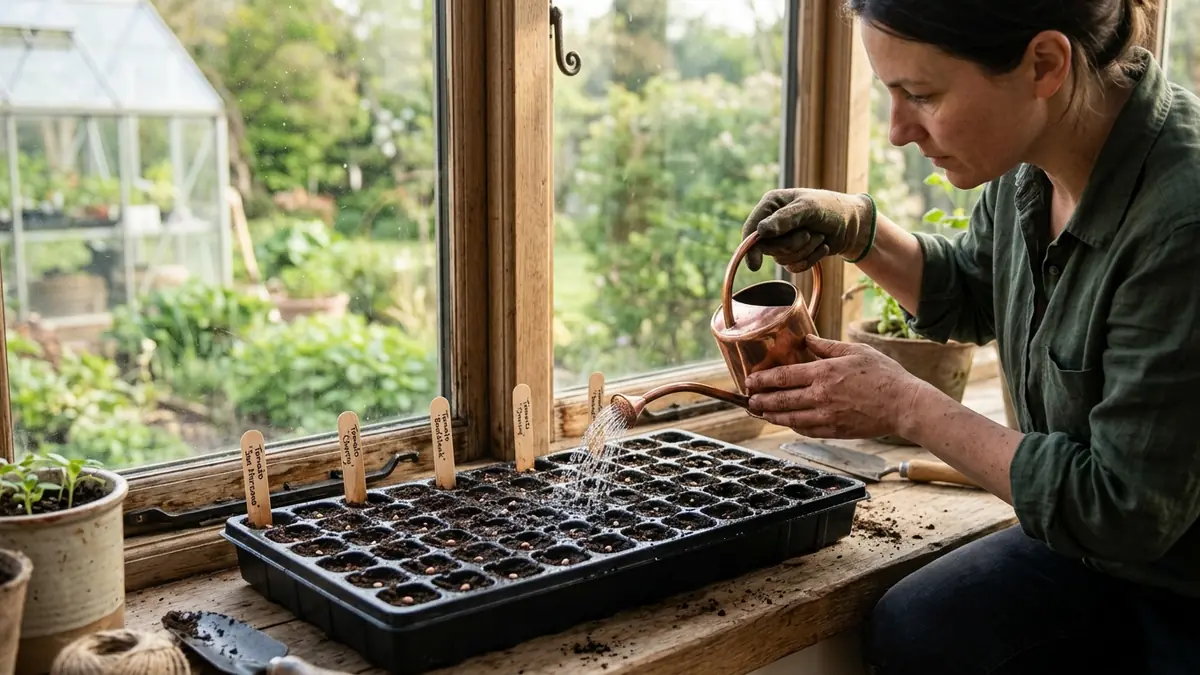
- Starting far more plants than you have room for.
- Keeping the growing medium soaking wet.
- Not giving young seedlings enough light.
- Leaving seedlings crowded for too long.
- Forgetting which tomato variety is in each cell.
- Moving indoor-grown seedlings outside too suddenly.
Build Your Own Tomato Seed-Starting Kit
You don't have to buy a packaged tomato growing kit. A DIY setup can work just as well: tomato seeds, a seed tray or small containers, suitable growing mix, plant labels, and a reliable light source. If you already own some of these supplies, buying individual items can save money.
For the complete indoor process, see How to Start Tomato Seeds Indoors.
Frequently Asked Questions
Are tomato starter kits worth it?
They can be, especially for beginners. They save the work of matching several basic supplies, while experienced gardeners may save money by buying only what they need.
What is the best tomato starter kit for beginners?
Our overall pick from this list is the Burpee Best Starter Kit because it combines several named tomato varieties with basic starting supplies. For many seedlings, choose a larger 72-cell setup instead.
Do tomato starter kits include everything I need?
Not always. Many kits include trays, cells, growing medium, and/or a dome, but they may not include a grow light, heat mat, or enough containers for transplanting seedlings later. Check the listing for what's included before assuming.
Do I need a grow light for tomato seedlings?
Not strictly, but most homes don't get enough direct window light to keep seedlings from getting tall and leggy. A basic LED grow light run 12–16 hours a day produces sturdier plants than window light alone in most cases.
Can I start tomato seeds indoors?
Yes. Indoor seed starting is a practical way to give young tomato plants a head start. You need suitable containers, growing medium, moisture, and strong enough light.
How long do tomato seeds take to germinate?
Many tomato seeds sprout in about 5 to 10 days under warm, moist conditions, although timing varies by variety and temperature.
Do tomato seedlings need a humidity dome?
No. A dome can help keep the medium from drying out while seeds germinate, but it isn't essential, and it should come off once seedlings emerge.
Do I need a self-watering tomato starter kit?
No. It can make moisture management easier, but ordinary trays work well when watered carefully.
What size starter cells are best for tomatoes?
Tomatoes can start in small cells, but larger or deeper cells give growing seedlings more room. With small cells, plan to transplant sooner rather than later.
Can I reuse tomato seed starting trays?
Many plastic trays can be reused if they remain in good condition. Clean them between seasons and replace any that are cracked or damaged.