How to Prune Tomato Plants: When, Where & What to Cut

Tomato plants can grow into a wild tangle of stems and leaves surprisingly quickly. One day the plant looks neat and manageable; a couple of weeks later, you may find yourself wondering which shoots should stay, which ones should go, and whether you are about to cut off something important.
The good news is that pruning tomatoes is much easier once you know what you are looking for.
The first thing to understand is that not every tomato plant should be pruned in the same way. Tall, vining tomatoes usually benefit from regular, selective pruning, while bushier tomatoes often need very little. The goal is not to strip the plant bare. It is to keep growth manageable, remove unnecessary shoots, and give the plant enough room for healthy leaves, flowers, and fruit.
This guide shows you exactly when to prune, where to cut, how to find tomato suckers, and how the approach changes for different types of tomatoes — whether you call it pruning, trimming, or snipping, it's all the same job.
Yes, tomato plants can be pruned, but they do not all need the same amount of pruning.
Tall, vining tomato plants usually benefit most from removing some of the small shoots that grow between the main stem and side branches. Bush-type tomatoes generally need much less pruning.
The best time to start is when the plant is established and growing strongly. Remove small, unwanted shoots while they are easy to handle rather than waiting until they become large branches.
The most important rule is simple:
Do not remove healthy leaves just for the sake of making the plant look neat.
Your tomato plant needs plenty of healthy foliage. Good pruning is selective, not aggressive.
1. Do Tomato Plants Need to Be Pruned?
No, pruning is not something every tomato plant absolutely needs.
A tomato plant can grow, flower, and produce fruit without being heavily pruned. In fact, some bush-type tomatoes are perfectly happy with little or no pruning.

So why do gardeners prune?
Pruning can make a tomato plant easier to manage. It can help keep a large plant from becoming an impossible tangle, make it easier to see and pick the fruit, and allow better air movement through a crowded plant. It can also help you keep a vining plant growing in the direction you want.
There is an important difference between helpful pruning and over-pruning.
Helpful pruning means removing selected growth that you don't need.
Over-pruning means cutting away so much healthy growth that the plant loses a large part of its useful leaf cover.
You don't want a tomato plant that looks almost bare.
Think of pruning as giving the plant a little haircut rather than giving it a complete makeover.
When pruning makes the most sense
Pruning can be especially useful when:
- your tomato plant is growing very vigorously
- several side shoots are creating a dense tangle
- the plant is being trained up a stake or trellis
- you want to keep a vining plant to one or two main stems
- lower leaves are touching the soil
- damaged or diseased leaves need to be removed
- you need better access to the fruit
If you have a compact bush-type tomato, however, there may be very little reason to prune it.
The variety's growth habit should always come first.
2. Determinate vs. Indeterminate Tomatoes
Before you make a single cut, find out what kind of tomato plant you have.
This makes a huge difference.
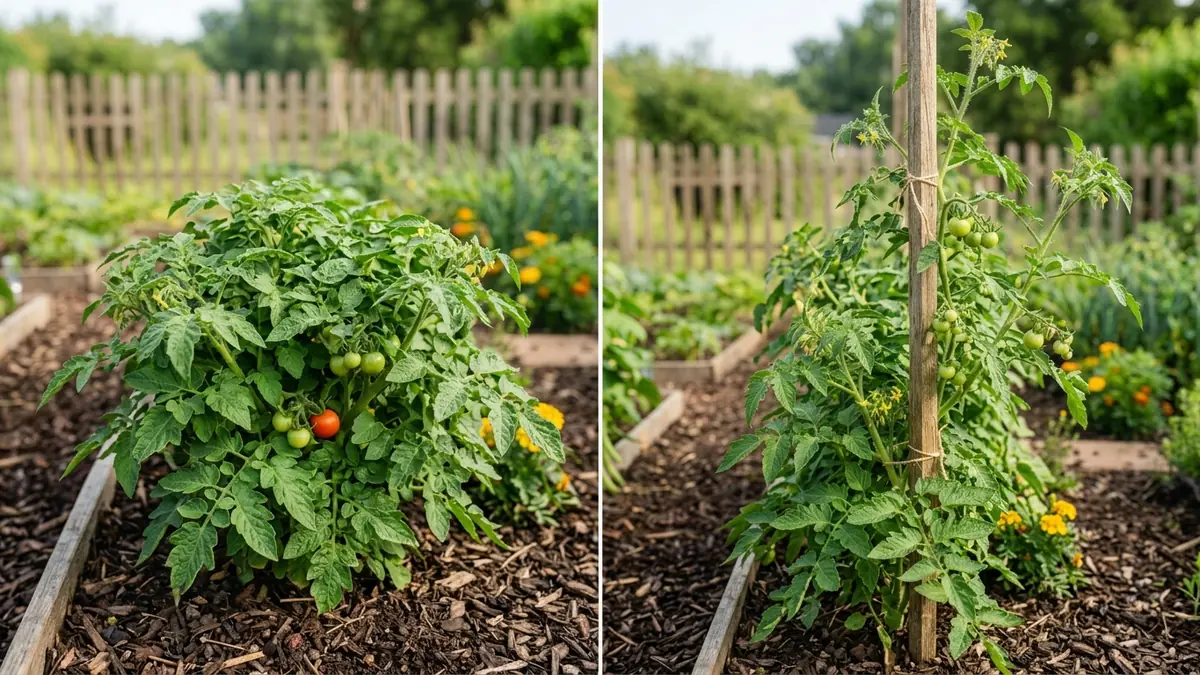
Determinate tomatoes: the bushy type
Determinate tomatoes grow to a more limited size and then stop getting taller. They tend to produce a large portion of their crop over a shorter period.
Because they naturally stay more compact, they usually need little pruning.
Removing lots of side shoots from a determinate plant can mean removing branches that would have produced flowers and fruit.
If you grow a bushy Roma or another compact variety, don't automatically start removing every shoot you see.
Indeterminate tomatoes: the vining type
Indeterminate tomatoes keep growing throughout the season as long as conditions remain suitable.
They can become very tall and produce many side shoots. These plants are the ones most home gardeners think about when they talk about regular tomato pruning.
They usually need some kind of support too, such as a stake, cage, or trellis.
Because they keep producing new growth, selective pruning can make them much easier to manage.
| Determinate (bush type) | Indeterminate (vining type) | |
|---|---|---|
| Growth | Stops after reaching a certain size | Keeps growing all season |
| Fruit set | Mostly at once, over a shorter period | Continuously through the season |
| Pruning | Little or none | Regular, selective sucker removal |
| Support | Often minimal | Stake, cage, or trellis |
The easiest way to remember it
Determinate = bushy and limited growth = usually light pruning.
Indeterminate = tall and continuing growth = usually more regular pruning.
If you're not sure which type you have, check the plant label, seed packet, or variety information before pruning heavily. Our determinate vs. indeterminate guide walks through the differences in more detail.
3. When Should You Prune Tomato Plants?
There is no single date on the calendar when every tomato plant should be pruned.
Instead, watch the plant.
Once your tomato is established, growing strongly, and producing plenty of new growth, you can begin light pruning if the plant needs it.
For small suckers, it is easier to remove them while they are young. They can often be pinched away with your fingers before they become thick branches.
Early in the season
Don't rush to remove lots of growth from a young plant.
Let the plant establish itself and develop healthy leaves and stems.
As the plant grows
This is when regular checking becomes useful.
Look at the points where leaves and branches meet. If your plant is an indeterminate type, you'll often find small shoots developing there.
Remove the ones you have decided not to keep while they are still small.

During flowering and fruiting
Continue checking the plant as it grows.
You don't need to walk out with scissors every day. A quick inspection once or twice a week is usually enough for most home gardens.
During very hot weather
Be more careful about heavy pruning when the plant is already stressed by extreme heat.
If your plants are struggling through a heatwave, wait for conditions to improve before making major cuts.
Is it ever too late to prune?
You can still remove damaged, diseased, or clearly unwanted growth later in the season.
But avoid suddenly stripping a mature plant of lots of healthy leaves.
Late-season pruning should be thoughtful rather than aggressive.
4. Pruning Tomato Seedlings and Young Plants
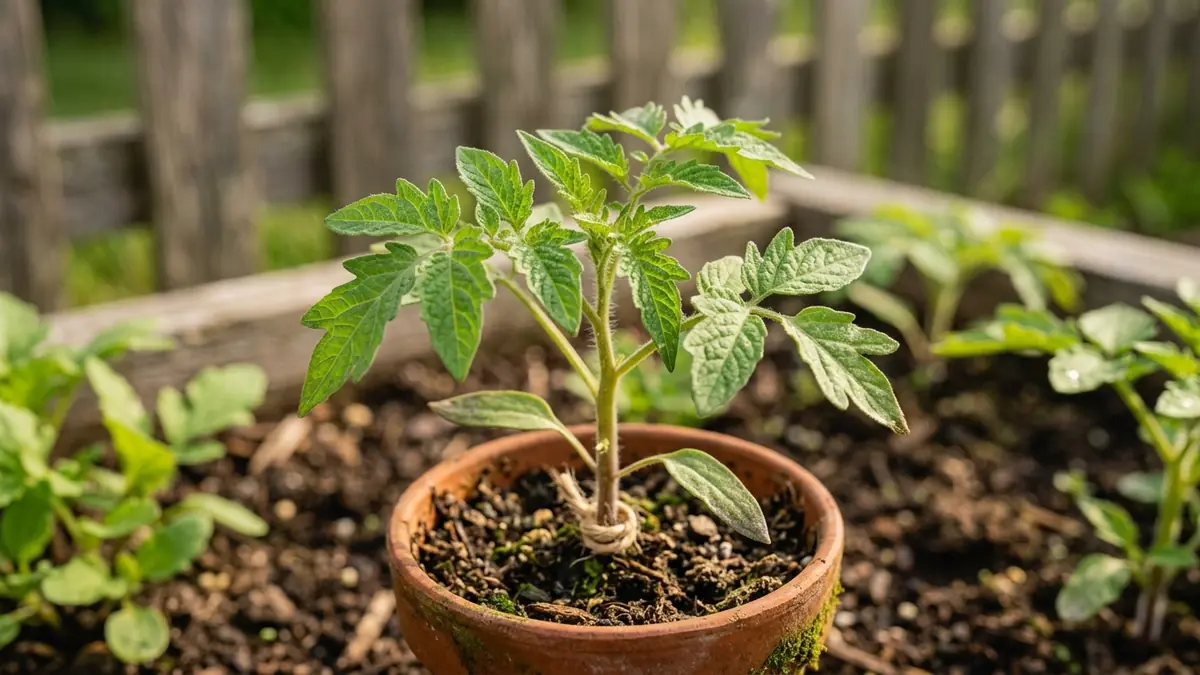
Should you prune a tomato seedling? In most cases, no — not yet.
A young plant needs every leaf it has. Those first true leaves are doing the work of building a strong root system and a sturdy stem. Removing them too early can slow the plant down right when it needs to be growing fast.
What you can remove on a seedling
- the very first two leaves (the cotyledons) once they start to yellow naturally
- any leaves touching the soil after transplanting
- damaged or broken leaves from handling or wind
That's about it. Don't go looking for suckers on a seedling — at this stage there usually isn't much to prune yet.
When does real pruning start?
Wait until the plant has several sets of true leaves and is growing steadily in its final spot, whether that's a container or the garden bed. Once it starts branching out and producing suckers of its own, the guidance in the rest of this article applies.
Pruning a stressed or newly transplanted seedling can set it back further. Give it a week or two to settle in first. Penn State Extension has more on getting young transplants established before pruning begins.
5. How to Prune Tomato Plants Step by Step
Now for the part most gardeners actually want to know: the actual mechanics of trimming a tomato plant, sucker by sucker. Here's the process broken into eight steps.
- Start with a healthy plant. Don't begin by cutting randomly. Look at the whole plant first and find the main stem, the larger branches, the flower clusters, the developing tomatoes, and the smaller shoots.
- Find the main stem. This is the central stem that carries the plant upward. Follow it from the base toward the top — it becomes your reference point for deciding which growth to keep.
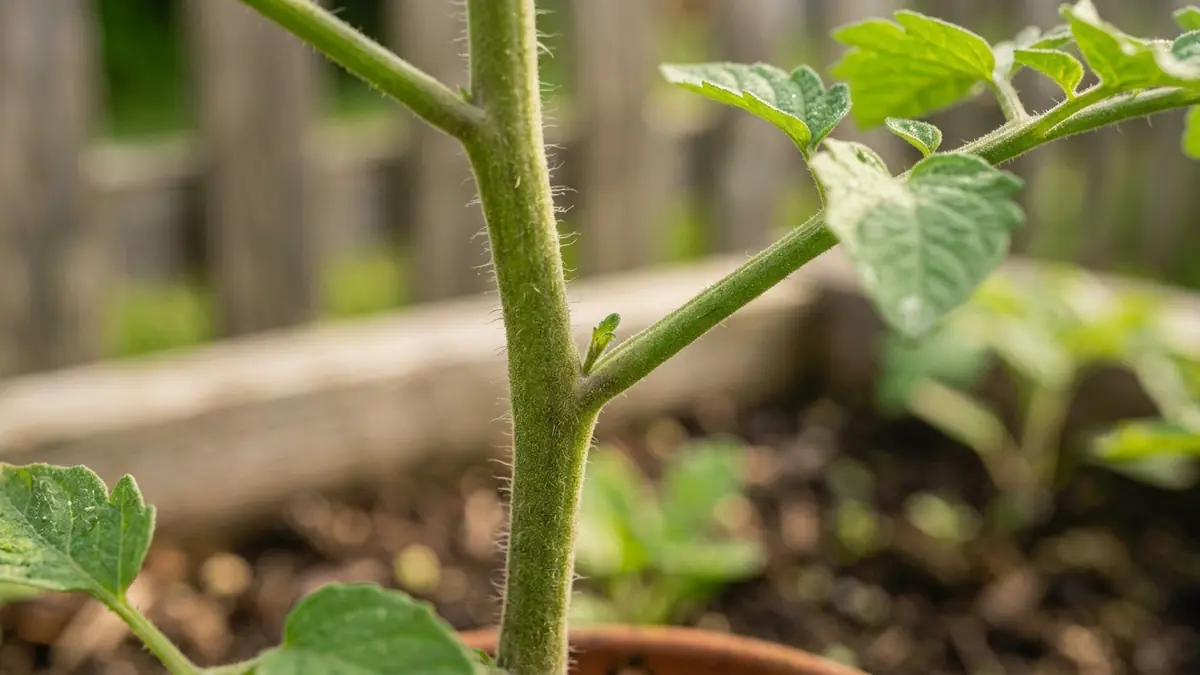
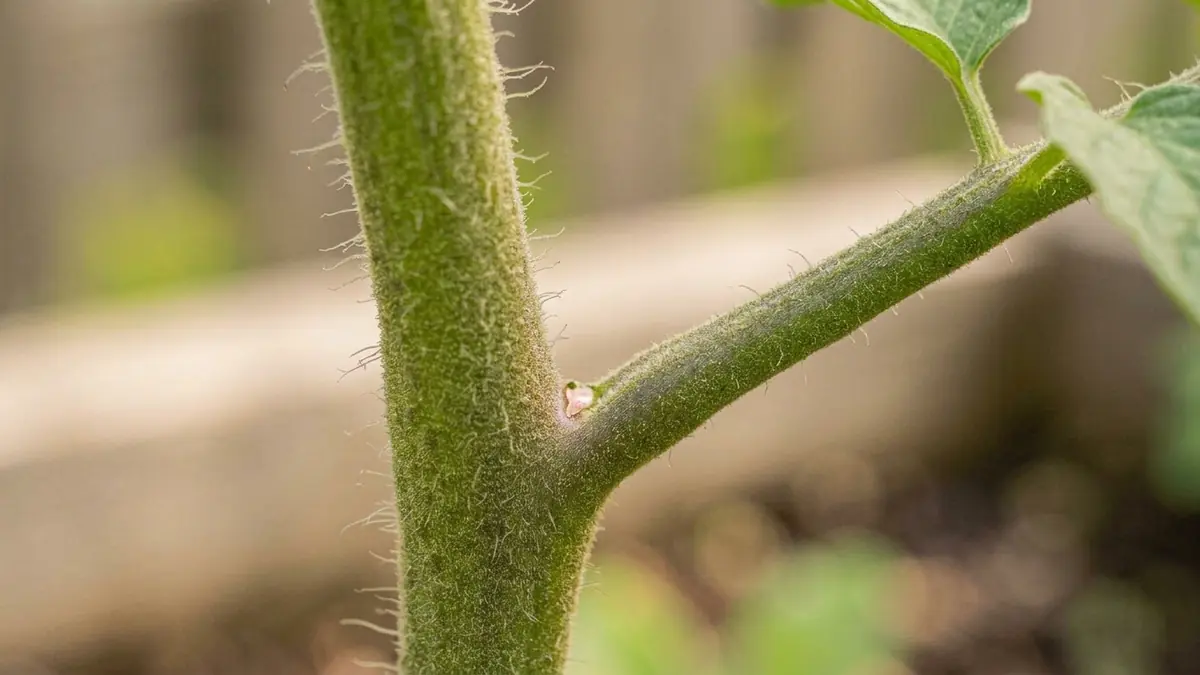
- Look for suckers. A tomato sucker is a small shoot that develops in the angle between the main stem and a leaf branch, especially common on indeterminate tomatoes. Small suckers can usually be removed easily with your fingers.
- Remove unwanted small suckers. Hold the sucker gently and pinch it away. If it has become too large to remove easily by hand, use clean pruning shears — don't yank hard enough to damage the main stem.
- Remove damaged or diseased leaves. If you see leaves that are clearly damaged or showing signs of a problem, remove them carefully. Clean your hands or tools before moving on to another healthy plant.
- Look at the lower part of the plant. Lower leaves that touch or sit very close to the soil can be removed when necessary. But don't strip the whole bottom half of a healthy plant just because you saw someone else do it.
- Step back and look at the plant. After a few cuts, stop. Look at the plant from a distance — does it still have plenty of healthy leaves, is it supported properly, can you see the fruit, does it still look balanced? If yes, you may already have done enough.
- Keep checking as the plant grows. Pruning isn't a one-time event for a vigorous vining tomato. New shoots will keep appearing, and a few minutes of regular checking is much easier than trying to untangle a giant jungle of growth later.


6. Where to Prune Tomato Plants
Knowing where to cut is more important than simply knowing that you should prune.
For a small sucker, look at the point where the main stem and leaf branch meet.
That little V-shaped space is where the sucker usually appears.
If the sucker is small, you can pinch it off close to its base.
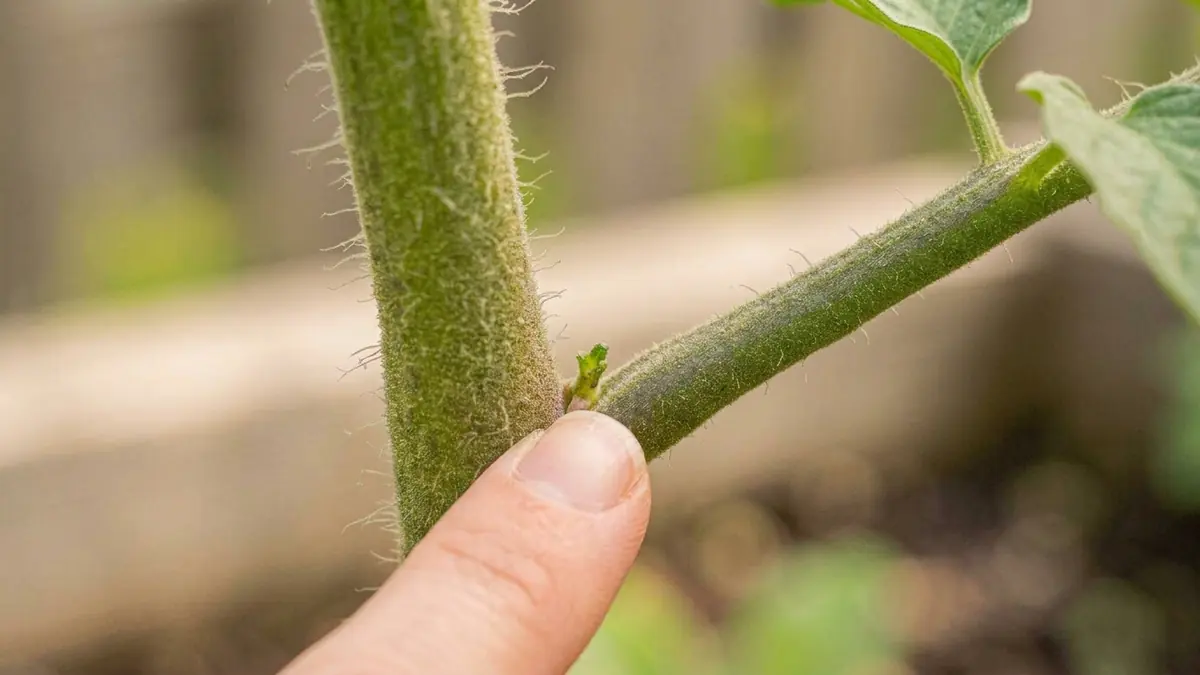
If you are using shears, make a clean cut without damaging the main stem or the nearby leaf branch.
What about lower leaves?
Lower leaves can be removed when they are touching the soil, damaged, or clearly causing problems.
Remove them carefully rather than stripping every leaf below the fruit. Removing foliage from the bottom 6–12 inches of the plant is a common recommendation from extension programs like Iowa State University Extension, since it reduces soil-borne disease splashing onto the leaves.
What about the top?
Don't randomly cut the top of a healthy tomato plant.
Topping is a separate decision and can make sense in some growing situations, particularly when a vining plant has reached the limit of its support or the end of the growing season is approaching.
For normal home-garden pruning, concentrate first on unwanted side shoots and damaged growth.
7. How to Identify Tomato Suckers
This is the skill that makes tomato pruning much easier.
A sucker grows from the angle between a tomato plant's main stem and a leaf branch.
Imagine looking at the plant from the side.
You will see:
main stem → leaf branch → small shoot growing from the junction
That small shoot is the sucker.
When it is tiny, it can look almost like a new leaf or branch.
Give it a little time and it becomes much easier to recognize. For more detail on sucker identification, the University of Wisconsin–Madison Extension has a helpful breakdown of the practice.

The easiest trick
Follow a leaf branch back toward the main stem.
Look directly at the point where they meet.
If another small shoot is growing from that same junction, you have probably found a sucker.
Don't remove everything that grows
This is where beginners sometimes go too far.
A flower cluster is not automatically a sucker.
A healthy branch is not automatically a sucker.
And a tomato plant being bushy does not mean every extra-looking stem needs to go.
When in doubt, identify what the growth actually is before cutting it.
8. How to Prune Indeterminate Tomatoes
Indeterminate tomatoes are the main candidates for regular pruning.
These are the tall, vining plants that keep producing new growth.
If left alone, they can become very large and crowded.
A simple approach
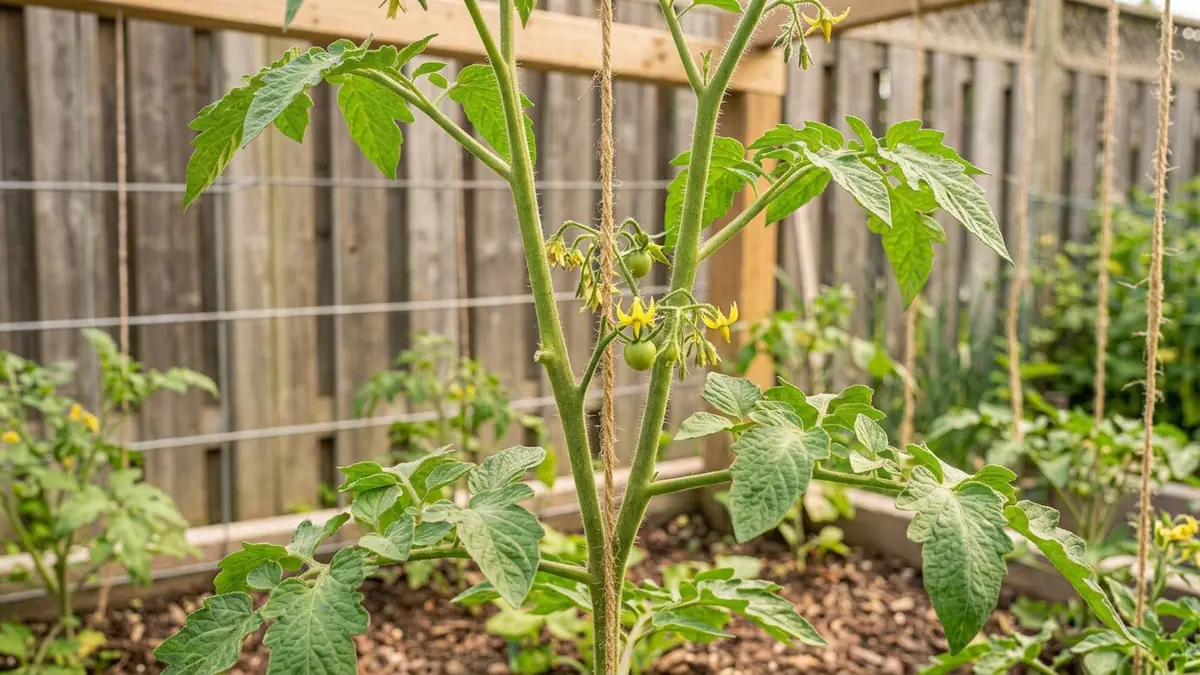
Choose one or two main stems that you want the plant to grow along.
Then regularly remove small suckers that you don't want to become full-size branches.
Tie or guide the main growth onto its support as the plant gets taller.
This gives you a plant that is easier to manage and easier to harvest.
Don't remove every sucker automatically
Some gardeners remove almost every sucker.
Others keep one or two additional stems.
There isn't one magic pruning style that works perfectly for every garden.
Your support system, variety, space, weather, and personal preference all matter.
The important thing is to avoid letting the plant become an uncontrolled mass of stems if you are trying to grow it vertically.
Keep healthy leaves
Even on a heavily managed indeterminate plant, healthy leaves are valuable.
Don't turn a vigorous plant into a bare stem.
The goal is controlled growth, not maximum cutting.
9. How to Prune Determinate Tomatoes
Determinate tomatoes are where many gardeners make the biggest pruning mistake.
Because these plants are naturally bushy, you may see lots of stems and assume they need cleaning up.
Usually, they don't.
Determinate plants often produce flowers and fruit on their side branches. Removing too many of those branches can reduce the plant's ability to produce the crop you planted it for.
So, do you prune determinate tomatoes?
Usually, only lightly.
You may remove:
- damaged leaves
- diseased leaves
- leaves touching the soil
- clearly unwanted growth
- a small number of shoots if your particular plant needs it
But don't treat a determinate tomato like a tall vining variety.

If you have a compact tomato that is healthy and producing well, leaving most of its natural growth alone is often the better choice.
10. How to Prune Cherry Tomato Plants
Cherry tomatoes can be confusing because "cherry tomato" describes the fruit, not necessarily the way the plant grows.
Some cherry tomatoes are compact.
Others are vigorous vines that keep growing and producing fruit.
So before pruning, find out which type you have.

If your cherry tomato is indeterminate
Treat it much like another vining tomato.
Give it support and selectively remove unwanted suckers.
This can help keep the plant from becoming an enormous tangle.
If your cherry tomato is determinate
Use a much lighter touch.
Let the plant keep much of its natural bushy growth.
A common mistake
Don't assume that because a cherry tomato produces lots of branches, you need to remove most of them.
Cherry tomatoes can naturally look wild.
Wild-looking does not automatically mean unhealthy.
11. How to Prune Roma Tomatoes
Roma tomatoes are another variety where checking the plant's growth habit matters.
Many Roma types are compact and determinate, so they generally don't need the aggressive pruning that a tall vining tomato may need.

If your Roma plant is bushy but healthy, producing flowers and fruit, don't start removing branches simply to make it look cleaner.
Focus on:
- damaged growth
- diseased leaves
- leaves touching the soil
- genuinely unwanted shoots
If your particular Roma variety is indeterminate, however, its pruning needs will be closer to those of other vining tomatoes.
The plant's growth habit matters more than the name "Roma."
12. Pruning by Popular Tomato Variety
If you're not sure how much to prune, knowing the variety you're growing helps. Most seed packets and plant tags list whether a variety is determinate or indeterminate — here's a quick reference for some common ones.
| Variety | Growth Type | Pruning Note |
|---|---|---|
| Better Boy | Indeterminate | Vigorous vine, needs regular sucker removal all season |
| Celebrity | Determinate | Light pruning only — mostly damaged leaves and lower growth |
| Early Girl | Indeterminate | Pruning to 1–2 main stems can speed up its already-early harvest |
| Beefsteak | Indeterminate | Large, heavy vine — needs strong support plus regular pruning |
| San Marzano | Indeterminate | Tall grower, similar sucker-removal needs to other vining paste tomatoes |
| Roma | Usually determinate | See the Roma section above for details |
| Cherry (Sun Gold, Sweet 100) | Usually indeterminate | See the cherry tomato section above for details |
| Brandywine | Indeterminate (heirloom) | See the heirloom section below for details |
This is a general guide — always check your specific seed packet or plant tag, since some breeders release determinate versions of normally-indeterminate varieties and vice versa.
13. How to Prune Heirloom Tomatoes
Heirloom tomatoes bring their own pruning quirks, mostly because of how they grow rather than because they're heirlooms.
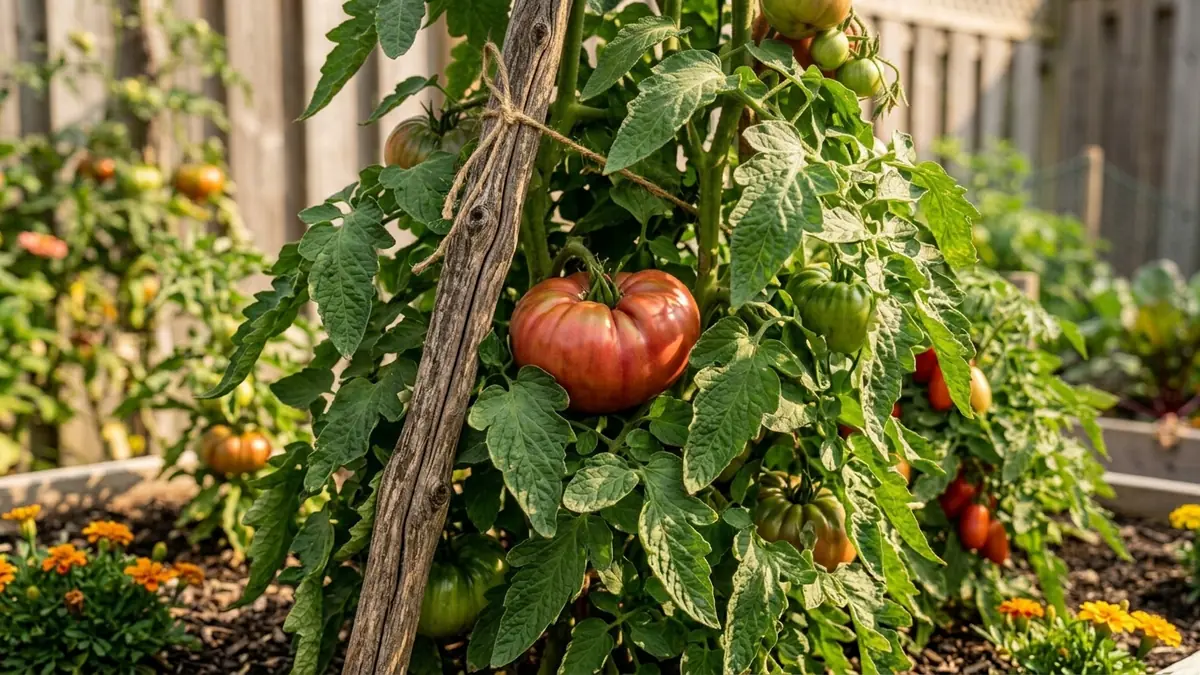
Most heirloom varieties are indeterminate and often quite vigorous, which means they need the same selective sucker removal described earlier in this guide. But heirlooms tend to have a few extra considerations worth knowing.
Why heirlooms need a bit more attention
- Many heirloom varieties have larger, heavier leaves and sprawling growth, so airflow matters even more.
- Older, open-pollinated varieties can be more prone to fungal issues, so removing lower leaves and keeping the plant open is worth prioritizing.
- Large-fruited heirlooms often have thinner skins that can sunscald more easily, so avoid stripping the leaves that shade developing fruit.
A lighter hand pays off
Because many heirloom tomatoes are already vigorous growers, it's tempting to prune them hard. Resist that. Keep enough leaf cover to protect the fruit, and focus your cuts on suckers, damaged growth, and improving airflow rather than heavy shaping.
If you're not sure whether your particular heirloom is determinate or indeterminate, treat it as indeterminate until you know otherwise — most are.
14. How to Prune an Overgrown Tomato Plant
Sometimes a tomato plant gets away from you. A week or two of vacation, a bit of rain, and suddenly you're looking at a tangled mass of stems that has outgrown its support.
Catching up on an overgrown plant is different from routine, ongoing pruning. The instinct is to cut it all back at once — resist that instinct.

Work in stages, not one big session
- Start with the easy wins: damaged, yellowing, or diseased leaves, and anything already touching the ground.
- Remove the largest, most obviously unwanted suckers next, especially ones crowding the main stems you want to keep.
- Stop and reassess. Come back in a few days rather than trying to finish everything in one pass.
Cutting away a large portion of an overgrown plant's foliage all at once can stress it and expose fruit that was previously shaded. Spreading the work over a week or two gives the plant time to adjust.
Re-establish support first
An overgrown plant is often leaning or partly collapsed. Before doing much cutting, get the main stems tied up and supported again. It's much easier to see what actually needs to go once the plant isn't lying in a heap.
Once it's back under control, a quick check once or twice a week, as described earlier in this guide, will keep it from getting away from you again.
15. How to Prune Tomato Plants for Maximum Yield
This is one of the biggest reasons people search for tomato pruning advice.
But there is an important distinction:
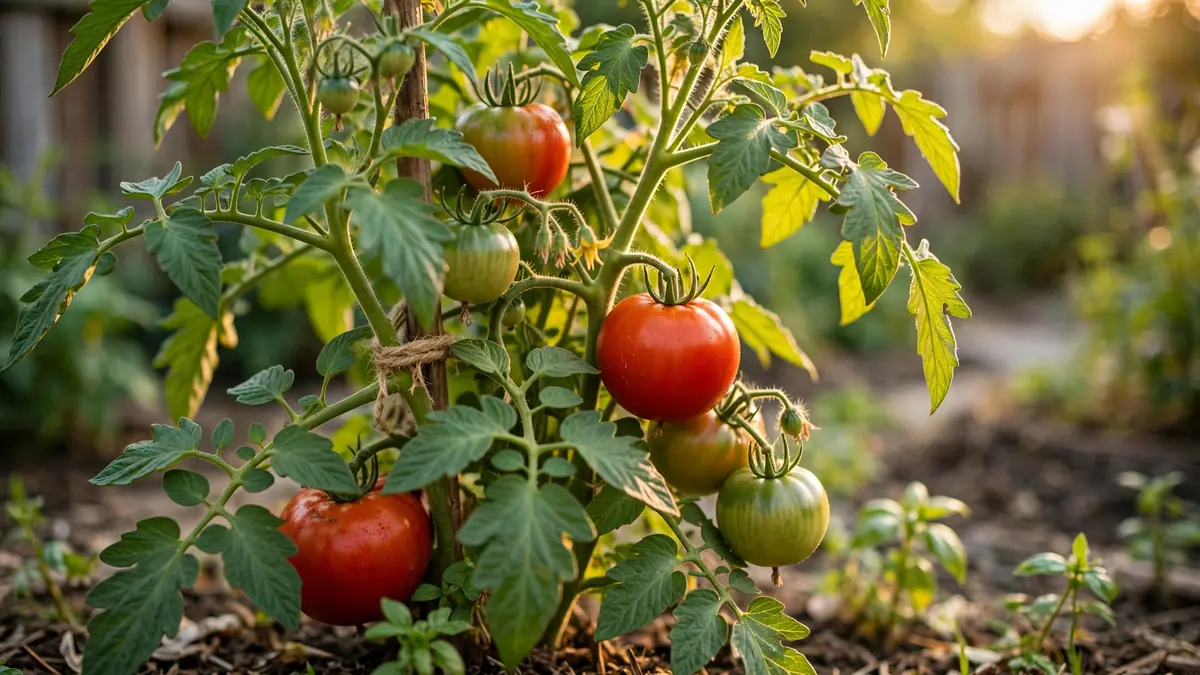
More pruning does not automatically mean more tomatoes.
Pruning can help you manage a large plant, improve airflow around crowded growth, keep fruit easier to reach, and direct the plant along its support.
But cutting away too much healthy foliage can work against you.
A better goal
Instead of asking:
"How much can I cut?"
Ask:
"What growth does this plant actually need?"
For a vining plant, selective sucker removal can keep the plant manageable.
For a bush-type plant, leaving more natural growth may be the better choice.
To encourage a productive plant
Give your tomato:
- enough sunlight
- consistent water
- appropriate feeding
- good support
- enough healthy leaves
- sensible pruning
- regular harvesting
Pruning is only one part of growing productive tomatoes. Don't expect pruning alone to fix problems caused by poor light, irregular watering, weak support, or unsuitable growing conditions.
Pruning around ripening fruit
Once fruit starts to set and ripen, be more selective about what you remove nearby.
Avoid stripping the leaves directly shading a fruit cluster — exposed tomatoes can develop sunscald, especially during hot, sunny stretches. A few leaves near the fruit are doing useful work, not just sitting there.
It's still fine to remove suckers below and around fruit clusters, and to take off leaves that are yellowing or diseased. Just don't clear a wide patch of healthy foliage simply because you think the fruit "needs more sun" — it usually doesn't.
Near the end of the season, some gardeners remove the growing tip of an indeterminate plant, sometimes called topping, to redirect the plant's energy into ripening the fruit it already has rather than producing new flowers that won't have time to mature.
16. What NOT to Prune on a Tomato Plant
Knowing what to leave alone is just as important as knowing what to cut.
Don't remove healthy leaves just because they look large
Large, healthy leaves are doing useful work.
Keep them unless there is a good reason to remove them.
Don't remove every branch from a determinate plant
Those branches may be important for the plant's fruit production.
Don't remove flower clusters by mistake
Before cutting, make sure you know whether you are looking at a sucker, a leaf branch, or a flower cluster.
Don't strip the plant bare
A tomato plant should still have plenty of healthy foliage after pruning.
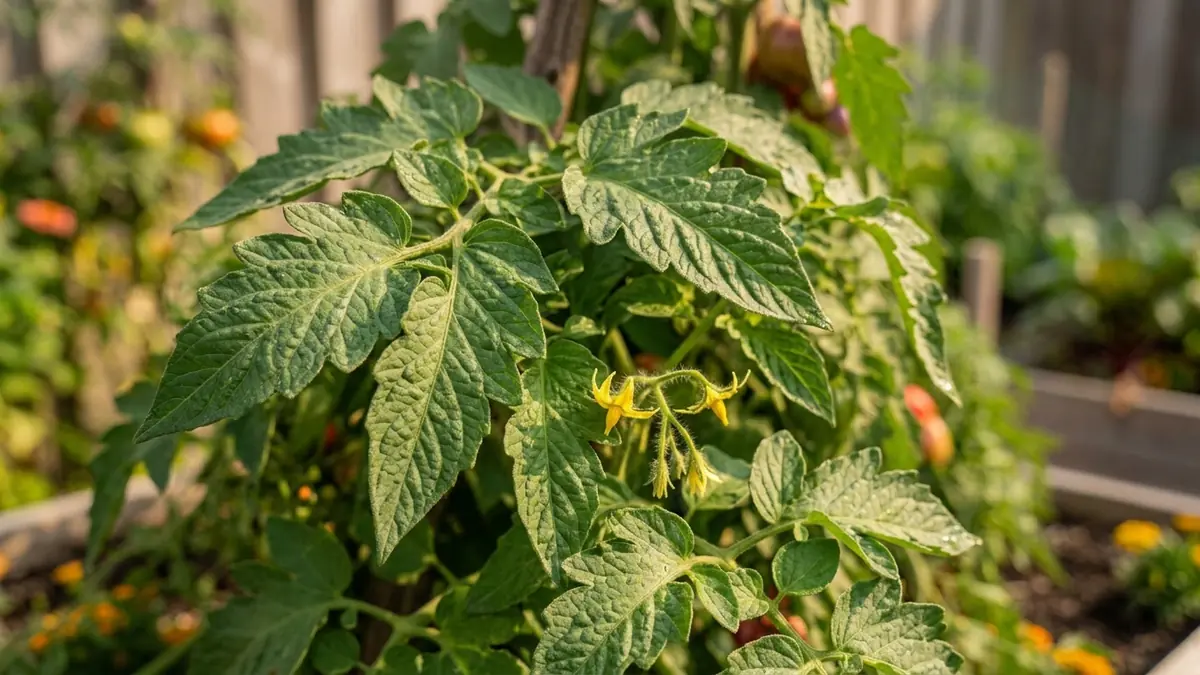
Don't make huge cuts just because the plant looks messy
Tomatoes are naturally messy growers.
Your goal is to manage the plant, not force it to look like a perfectly shaped ornamental plant.
Don't prune just before extreme heat if you can avoid it
Heavy pruning can add stress when the plant is already struggling with very hot conditions.
17. What Happens When You Over-Prune Tomatoes?
It is possible to prune too much.
An over-pruned tomato plant may have very little healthy foliage left compared with its size.
You may also notice that developing fruit is suddenly exposed to strong sunlight.
This is one reason "more pruning" is not the same thing as "better pruning."

Signs you may have gone too far
Look for:
- very sparse foliage
- large areas of exposed fruit
- a plant that suddenly looks bare
- lots of large cuts
- much less leaf cover than before
What should you do?
Don't panic.
Stop pruning.
Let the plant grow new leaves and shoots.
Keep the plant properly watered and supported, and avoid making more major cuts until it has recovered.
The best way to avoid over-pruning is simple:
Make fewer cuts and step back frequently to look at the whole plant.
18. Common Tomato Pruning Mistakes
1. Pruning without knowing the plant type
A determinate tomato and an indeterminate tomato should not automatically be treated the same way.
2. Removing too much
If you are standing there wondering whether you have already removed enough, that's probably a good time to stop and look at the plant.
3. Removing healthy leaves
Healthy leaves are useful. Don't remove them simply for appearance.
4. Confusing suckers with branches
Learn to identify the small shoot at the junction between the main stem and leaf branch before cutting.
5. Ignoring support
A tall tomato plant needs support. Pruning alone won't keep a large vining plant upright.
6. Letting suckers become huge before removing them
Small unwanted shoots are much easier to deal with than thick, established branches.
7. Using dirty tools
If you are cutting multiple plants, especially when one looks diseased, keep your tools clean.
8. Working on wet plants
Avoid pruning when the foliage is wet from rain, dew, or irrigation.
9. Chasing a bigger harvest through aggressive pruning
There is no prize for having the most heavily pruned tomato plant.
A healthy, well-managed plant is the goal.
10. Pruning on autopilot
Every cut should have a reason.
If you don't know why you are removing something, leave it until you do.

Frequently Asked Questions
Check vining tomato plants about once or twice a week during active growth. Remove unwanted small suckers while they are still easy to handle. Bush-type tomatoes usually need much less attention.
Sometimes. Vining tomatoes often benefit from selective pruning, while determinate tomatoes usually need little pruning.
Start when the plant is established and growing strongly. Continue checking it as it grows. Avoid heavy pruning when the plant is under major heat stress.
Yes. You can still remove unwanted suckers and damaged growth while the plant is flowering. Just be careful not to remove flower clusters or large amounts of healthy foliage.
Usually only lightly. Determinate tomatoes naturally stay more compact, and their side branches can contribute to the crop.
Give the plant good support, choose the main stems you want to keep, and regularly remove unwanted suckers as the plant grows.
First find out whether your cherry tomato is determinate or indeterminate. Vining cherry tomatoes can be selectively pruned, while compact types generally need much less pruning.
Look at the junction between the main stem and a leaf branch. Small shoots growing from that angle are commonly tomato suckers and are the main targets for selective pruning.
The plant can be left with too little healthy foliage, and developing fruit may become overly exposed to strong sunlight. Stop pruning and allow the plant to produce new growth.
It is rarely too late to remove damaged, diseased, or clearly unwanted growth. However, avoid suddenly removing large amounts of healthy foliage from a mature plant.
Yes. Trimming, pruning, and snipping are different words for the same practice: selectively removing suckers, damaged leaves, or unwanted growth to keep a tomato plant manageable.
Generally not. A young seedling needs all its leaves to build a strong root system and stem. Wait until the plant has several sets of true leaves and is growing steadily before doing any real pruning.
Most heirloom tomatoes are indeterminate and benefit from the same selective sucker removal as other vining varieties, though a lighter touch helps protect their often thinner-skinned fruit from sun exposure.
Work in stages rather than cutting everything at once. Remove damaged growth and the largest unwanted suckers first, re-establish support, then reassess after a few days rather than finishing in one session.
Selective pruning can improve airflow and fruit size on vining tomatoes, but removing too much healthy foliage can reduce yield rather than increase it. Balance matters more than how much you cut.
Final Takeaway
Tomato pruning doesn't need to be complicated.
First, find out whether your plant is a bush-type or a vining type. Then learn to recognize the small suckers that grow between the main stem and leaf branches.
For vining tomatoes, regular selective pruning can keep the plant easier to manage. For determinate tomatoes, a lighter touch is usually better.
Most importantly, don't treat pruning as a competition.
The goal isn't to remove as much as possible. The goal is to remove what the plant doesn't need while keeping plenty of healthy growth behind.
Once you learn to spot a sucker, tomato pruning becomes a quick garden job rather than a guessing game.