Can You Grow Tomatoes From Store-Bought Tomatoes?
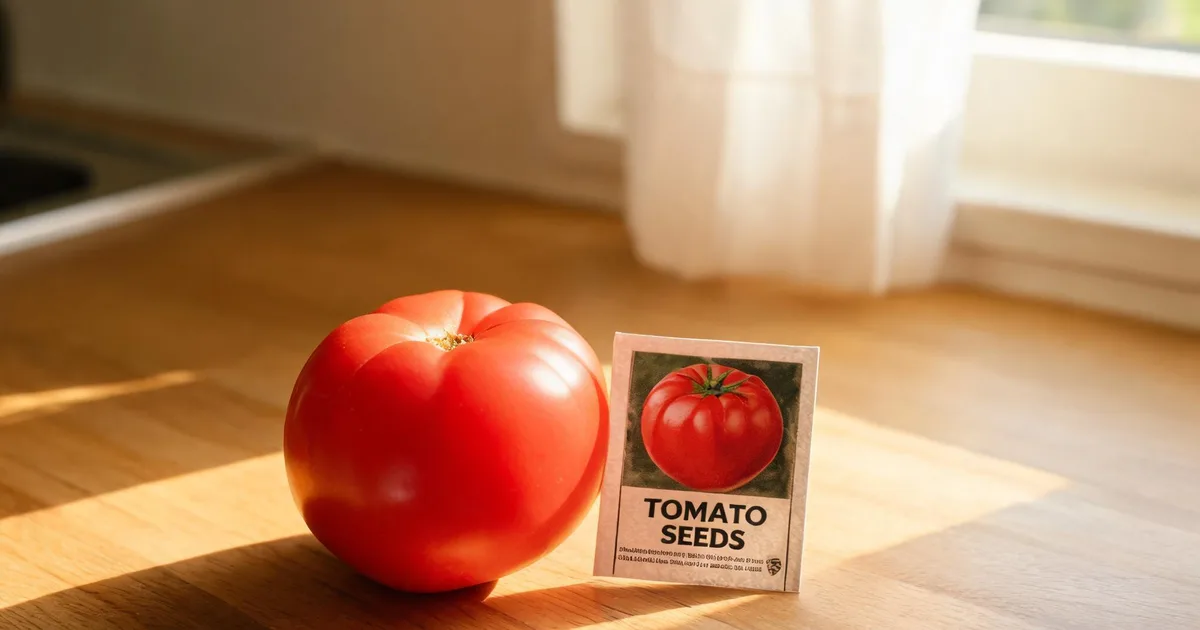
If you've ever sliced a tomato and wondered why you're paying $4 a packet at the garden center, you're not alone. Yes, you can grow tomatoes from the seeds inside a store-bought tomato — and it's one of the most satisfying free projects in gardening. It comes with caveats the viral videos skip, though. Here's how the seeds work, which tomatoes give the best odds, and exactly how to grow them.
Yes. The seeds inside a supermarket tomato will usually sprout and grow into a real plant. The catch is what you get: many store tomatoes are F1 hybrids, so the plant grows fine but the fruit may not match the one you ate. Choose a fully ripe, healthy tomato; the variety and seed maturity matter more than its size or whether it is organic. Germination depends on fruit maturity, seed condition, temperature, moisture, and handling.

Table of Contents
- Why Store-Bought Seeds Grow
- Why Many Are Hybrids
- What You'll Actually Get
- Packet Seeds vs Saved Seeds
- Which Tomatoes Work Best
- Three Ways to Grow Them
- Step-by-Step
- How Long It Takes
- Is It Too Late to Plant?
- Grow Them in Pots
- One Real Risk: Disease
- Troubleshooting
- Common Myths
- Grow From Store-Bought or Buy Seeds?
- Frequently Asked Questions
Why Store-Bought Tomato Seeds Grow at All

A tomato seed doesn't care where it came from. Given warm, damp soil, it takes up water and starts growing — the same in a seed packet or a grocery store tomato. If you choose packaged seeds, follow our step-by-step guide to germinating tomato seeds.
Those seeds are already fully formed and viable. The gel around each seed keeps it from sprouting inside the fruit; once the gel dries or rinses away, the seed is free to start. With suitable moisture, warmth, and air, seeds may germinate; results vary with fruit maturity and handling.
The big asterisk is ripeness. Commercial tomatoes are picked before they're fully ripe so they survive shipping, then ripened on the road with ethylene gas. An off-the-vine tomato can still have viable seeds, but they're less developed and germinate at lower rates. That's why a store tomato sometimes gives a weak sprout rate — not bad seeds, just young ones.
Why Many Supermarket Tomatoes Are Hybrids (F1)

Many supermarket tomatoes are F1 hybrids, and the variety is usually not labeled. An F1 hybrid is the first generation of a cross between two chosen parents. Breed Parent A with Parent B, and the seed grows into a plant with the best traits of both: consistent size, tough skin for shipping, uniform ripening, and disease resistance. Stores love them for it.
Here's the catch. F1 magic works for one generation only. Save seed from an F1 hybrid and you get the F2 generation — a genetic grab bag where the parent lines recombine unpredictably. A supermarket seed will absolutely grow into a tomato plant. It just might grow into one that looks and tastes nothing like its parent.
What You'll Actually Get

Plant seeds from a hybrid supermarket tomato and you'll likely get a healthy, productive plant. But the fruit could be smaller, larger, lumpier, earlier, later, less sweet, or more disease-prone than the tomato you started with. It's a lottery — and that's the point of the experiment.
Some traits drop away too. Hybrids are often bred for disease resistance, and that resistance doesn't always carry into the next generation — so your F2 plant may be more vulnerable to blight or wilt.
Bottom line: it's a gamble, not a shortcut — but if you get something great, you can save its seeds. See our guide to heirloom tomato varieties if predictable results matter more to you.
Store-Bought Seeds vs Seeds From a Tomato You Grew
Neither is always better. Packet seeds from a seed company give you a known variety and clear growing information. Seeds saved from a tomato you grew are free and can keep a favorite variety going, but only if the plant is open-pollinated. Seeds from a hybrid tomato usually do not grow into plants like the parent.
- F1 hybrid: a cross between two selected parent lines. Saved seeds often grow into plants and fruit that differ from the original.
- Open-pollinated (OP): a variety whose saved seeds generally grow into similar plants.
- Heirloom: a traditional variety that is always open-pollinated. Not every open-pollinated variety is an heirloom.
| Seed source | Matches the parent or variety? | Predictability | Disease and quality control | Cost | Best for |
|---|---|---|---|---|---|
| Packet seeds | Usually, when the variety is correctly labeled and grown as directed | Generally most predictable for a named variety | Reputable suppliers take steps to reduce seed-borne disease, but disease-free seed is not guaranteed | Usually costs money | Beginners and gardeners who want a specific variety |
| Saved seeds from an open-pollinated plant you grew | Usually similar to the parent, if unwanted crossing is avoided | Good, but not absolute | Save only from healthy, typical plants; fermentation may reduce some seed-borne disease but does not guarantee disease-free seed | Low or free | Keeping a favorite open-pollinated variety going |
| Seeds taken from a supermarket tomato | Unknown; if the parent is an F1 hybrid, offspring may vary | Variable | The variety and plant history may be unknown, and seed can carry pathogens | Usually free | Learning and experimenting |
Tomato flowers mostly pollinate themselves, although insects can occasionally cause crossing. Save seeds from healthy plants with typical fruit, not from weak or unusual plants. Fermenting the seeds, typically for 2–3 days (UGA Extension gives 48–72 hours), removes the gel around them and can reduce some seed-borne disease, but it does not guarantee disease-free seed. See our guides to saving tomato seeds and fermenting tomato seeds, and our list of heirloom tomato varieties.
Which should you choose?
- Choose packet seeds when you want a known variety and predictable results.
- Save seeds from an open-pollinated plant when you want to keep a favorite variety going.
- Try supermarket tomato seeds as an experiment, knowing the variety and results may vary.
Which Store-Bought Tomatoes Work Best

Ripeness is the biggest factor here. The riper the tomato, the more mature its seeds.
| Tomato source | Seed viability | What to expect |
|---|---|---|
| Fully ripe, intact tomato | Depends on seed maturity and handling | A sensible starting point; ripeness helps seeds reach maturity, but it does not guarantee germination. |
| Tomato with a known open-pollinated variety | Better chance of similar offspring | Check the variety name if available; open-pollinated status matters more than the organic label. |
| Tomato with an unknown variety | Uncertain | Seeds may germinate, but the resulting plant and fruit may not match the tomato you bought. |
Cherry, grape, Roma, and larger tomatoes
You can try seeds from many types of ripe tomatoes. Fruit size or shape alone does not establish whether a variety is open-pollinated or hybrid, and it does not guarantee better germination. When the variety is labeled, check its description; when it is unknown, treat the result as an experiment.
Three Ways to Grow Them

Straight from a fresh tomato
The fastest and messiest. Cut a ripe tomato open, scoop out the seeds with the gel still attached, and plant them straight into damp seed-starting mix. It works, but the gel can slow germination and wet pulp invites mold — best for an experiment, not a real batch.
The tomato slice trick
The viral one. Lay tomato slices flat on potting mix, cover with a thin layer of soil, and water. In a couple of weeks you get a dense forest of seedlings.
It genuinely works — but you get far more seedlings than you need, all crowded and hard to separate, and the rotting pulp attracts gnats and damping-off. Great for a video, more work than it looks.
Extract, rinse, and sow (recommended)
The method experienced growers use. Scoop the seeds and gel into a jar, add a little water, and let it sit warm for a few days until mold forms on top and the good seeds sink. Then rinse and dry. That's fermentation — optional, but it breaks down the gel for faster, more even germination and kills many disease organisms on the seed coat. In a hurry, just rinse the seeds in a strainer and sow right away.
Step-by-Step: Planting Seeds From a Store-Bought Tomato
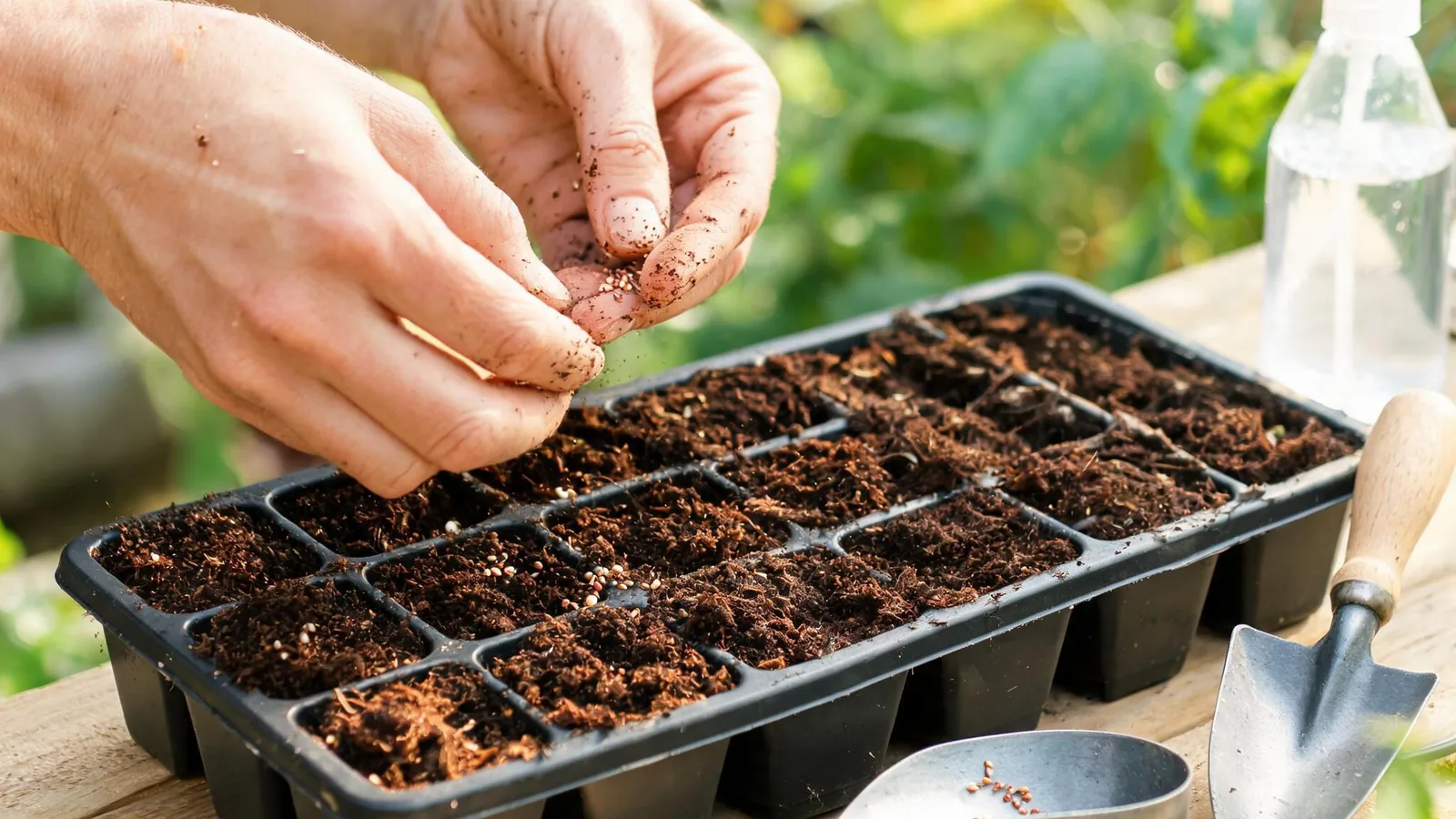
- Pick the ripest tomato you can find. Soft, deep-colored, fully ripe. Skip anything rock-hard.
- Extract the seeds. Cut it open, scoop seeds and gel into a bowl, then ferment or rinse. See harvesting tomato seeds.
- Sow about ¼ inch deep in fresh, sterile seed-starting mix — not garden soil. (Planting depth guide.) Space seeds an inch apart.
- Keep them at 68–77°F (20–25°C). A heat mat helps in a cool room.
- Keep the mix moist, not soggy. A humidity dome helps; uncover once sprouts appear.
- Wait 5–14 days. Most sprout in about a week. Don't give up on day six.
- Give them light the moment they sprout — a bright window or a grow light close to the leaves. Weak light makes leggy seedlings.
- Pot them up once they have a couple sets of true leaves.
- Harden them off with a week of gradually increasing outdoor time.
- Transplant into the garden or a big pot once nights stay above 50°F.
If you're raising seedlings, our grow tomato seedlings guide covers light, watering, and potting up in more detail.
How Long It Takes

| Stage | Typical time |
|---|---|
| Germination (seed to sprout) | 5–14 days |
| Seedling to transplant size | 5–7 weeks |
| Transplant to first flowers | 2–4 weeks |
| Flowers to ripe fruit | 45–80 days |
| Full season, seed to harvest | Roughly 4–6 months |
Even a fast cherry tomato takes a few months from seed to ripe fruit. Start indoors well before your last frost.
Is It Too Late to Plant? (Timing)

It depends on where you live and what you're planting into.
Tomatoes need a long, warm season. Starting indoors from seed, begin about 6–8 weeks before your last expected frost, so seedlings are ready to go out once the soil warms. Sow too late and the plant spends the season catching up — you may still get fruit, but less of it, and an early frost can end things before they ripen. See our guide on how to start tomato seeds indoors for the full setup and timing.
- Indoors in early summer: fine in most climates, just a later harvest.
- Outdoors from seed in midsummer: possible in long-season areas, risky in short ones.
- A seedling in midsummer: often the smartest move if you're behind.
- Late summer or fall: usually too late outdoors unless fall stays frost-free, or you have a greenhouse.
Store-bought seeds are free, so a failed late attempt costs you nothing but time.
Grow Them in Pots

You don't need a garden bed, and for this experiment pots are ideal.
Use a container at least 12 inches across for a cherry or determinate type, and 18–24 inches for a full-size indeterminate. One plant per pot. Fill it with fresh potting mix, not garden soil — garden soil compacts in containers and can carry disease. Make sure it drains well. See growing tomatoes in pots for more.
Pots give you control: move them to chase the sun, bring them in when it gets cold, keep them away from soil-borne disease. Just check the soil daily in hot weather — containers dry out fast.
One Real Risk: Disease

Seeds can carry disease, and most articles gloss over it.
If the tomato you're growing from had a bacterial or fungal issue, some pathogens can ride along on the seed surface and infect your seedlings. The classic symptom is damping-off — seedlings that suddenly wilt, flop over, and die at the soil line.
You can cut the risk a lot:
- Ferment the seeds if you can. Fermentation kills many seed-borne organisms.
- Start with sterile seed-starting mix, never garden soil. (Seed starting mix guide.)
- Give seedlings airflow. A small fan or simply not crowding them goes a long way.
- Water at the base, not overhead. Wet leaves invite trouble.
- Don't overwater. Damping-off thrives in soggy, still conditions.
If seedlings do struggle, our guide to why tomatoes aren't growing walks through the usual causes.
Troubleshooting: When Store-Bought Seeds Don't Grow
| Symptom | Likely cause | Fix |
|---|---|---|
| No sprouts after 14 days | Immature or dried-out seed, too cold | Sow more, keep at 68–77°F, be patient |
| Pale, spindly sprouts | Not enough light | Move closer to a grow light or brighter window |
| Seedlings flop over and die at the base | Damping-off fungus | Improve airflow, water less, use sterile mix |
| Tiny flying insects around the tray | Fungus gnats from wet organic matter | Let the surface dry, use sticky traps |
| Mold on the soil surface | Too wet, too little airflow | Remove mold, add airflow, water less |
| Seeds rotted instead of sprouting | Overwatering | Keep mix damp but never soaked |
Common Myths, Cleared Up
Store tomatoes are GMO, so the seeds won't grow. No. There are no genetically modified tomatoes sold to consumers — GMO tomatoes exist only in research. Your tomato is a hybrid, not a GMO.
You have to ferment the seeds or they won't sprout. Not true. Fermentation helps — it cleans the seeds and breaks down the gel — but plenty of people sprout store-bought seeds with just a rinse.
The tomatoes will taste exactly the same. Unlikely with a hybrid. You might get lucky, or something totally different. With an open-pollinated heirloom, your odds of a match are much better.
The slice trick always works. It usually germinates, but germinating and growing well aren't the same thing. The slice method gives you crowded, competing seedlings and rotting pulp that can cost you the batch.
Should You Grow From Store-Bought or Buy Seeds?
Both have a place. Grow from store-bought tomatoes if you want a free, fun experiment, you're curious, or you're growing something small like cherries just to see what happens. The cost is zero and the lesson is real.
Buy seeds if you care about the result. A packet costs a few dollars and gives you a known variety, predictable flavor, documented disease resistance, and fruit that comes true to type. Want a specific tomato — a certain taste, a beefsteak that actually ripens? Packet seed is the reliable path.
The smart compromise: grow a few store-bought seeds for fun, and plant your serious tomatoes from packet seed.
Frequently Asked Questions
Seeds from a ripe supermarket tomato can germinate with suitable warmth, moisture, and air, but results vary with seed maturity and handling.
Very likely. A store-bought seed usually grows into a healthy plant that flowers and sets fruit. The fruit just might not match the parent.
Not necessarily. If the parent was an F1 hybrid, the offspring can taste quite different. Open-pollinated and heirloom tomatoes have a much better chance of matching.
Some supermarket varieties are hybrids, but the variety is not always identified on the fruit. Seeds from an F1 hybrid may grow, but the next generation may differ from the parent.
Yes. Scoop out the seeds and gel and plant them directly. It works, though you'll get faster, cleaner results if you rinse or ferment first.
Sometimes. Whole tomatoes occasionally sprout in warm, moist soil — that's why volunteers appear in compost piles. But burying a whole one gives you crowded, unruly sprouts, so extract the seeds instead.
Yes, that's the viral slice trick. Lay slices on soil, cover lightly, and water. Seeds sprout in a couple of weeks, but they come up crowded and the rotting pulp invites mold, so it's more of a novelty than a method.
Seeds from ripe cherry, grape, Roma, and other tomatoes may germinate. Fruit type alone does not show whether a variety is open-pollinated or hybrid, so the resulting plants and fruit may vary.
No, but it helps. Fermentation breaks down the gel, speeds up germination, and reduces seed-borne disease. If you'd rather not bother, a rinse works fine.
Usually 5–14 days at 68–77°F (20–25°C). Most sprout within about a week. Cooler temperatures slow them down.
No. There are no GMO tomatoes on the consumer market. They're hybrids, which is a different thing entirely.
Most often the seeds came from an underripe tomato, the temperature was too cool, or the mix was too wet or too dry. Try again with the ripest tomato you can find and steady warmth.